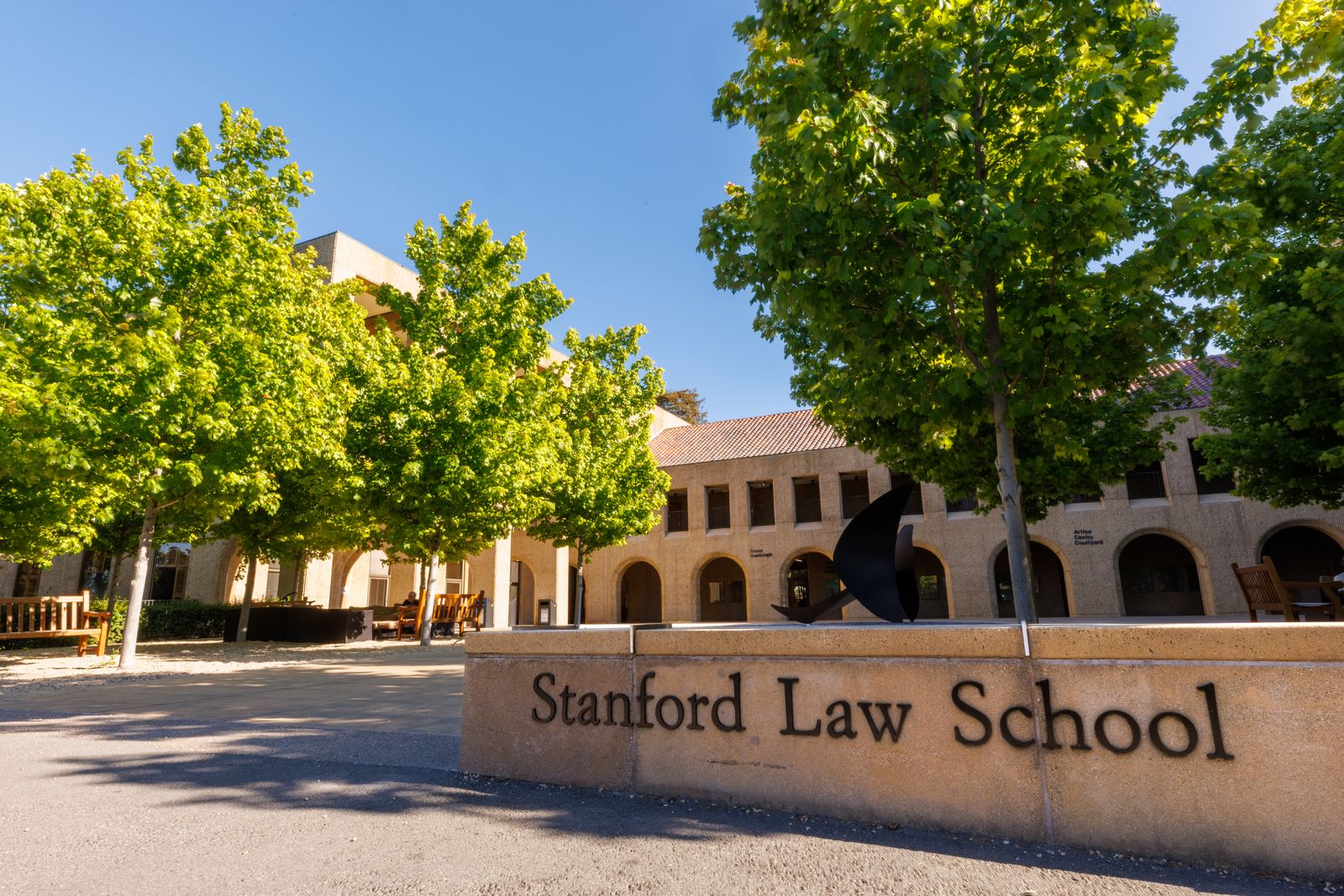

Stanford Law School
Stanford, CA

Class Profile
Total JD population: 565
First-year class size: 185
GPA range: 3.12–4.23
LSAT range: 160–180
After Graduation
Employed or pursuing an advanced degree within 9 months: 99%
Students in a typical class who clerk: 39%
Median starting salary for private sector: $225,000
Student Experience
Student-to-faculty ratio: 4.19:1
53% of students work on law reviews and journals
Guaranteed first-year housing
Introduction to Stanford Law
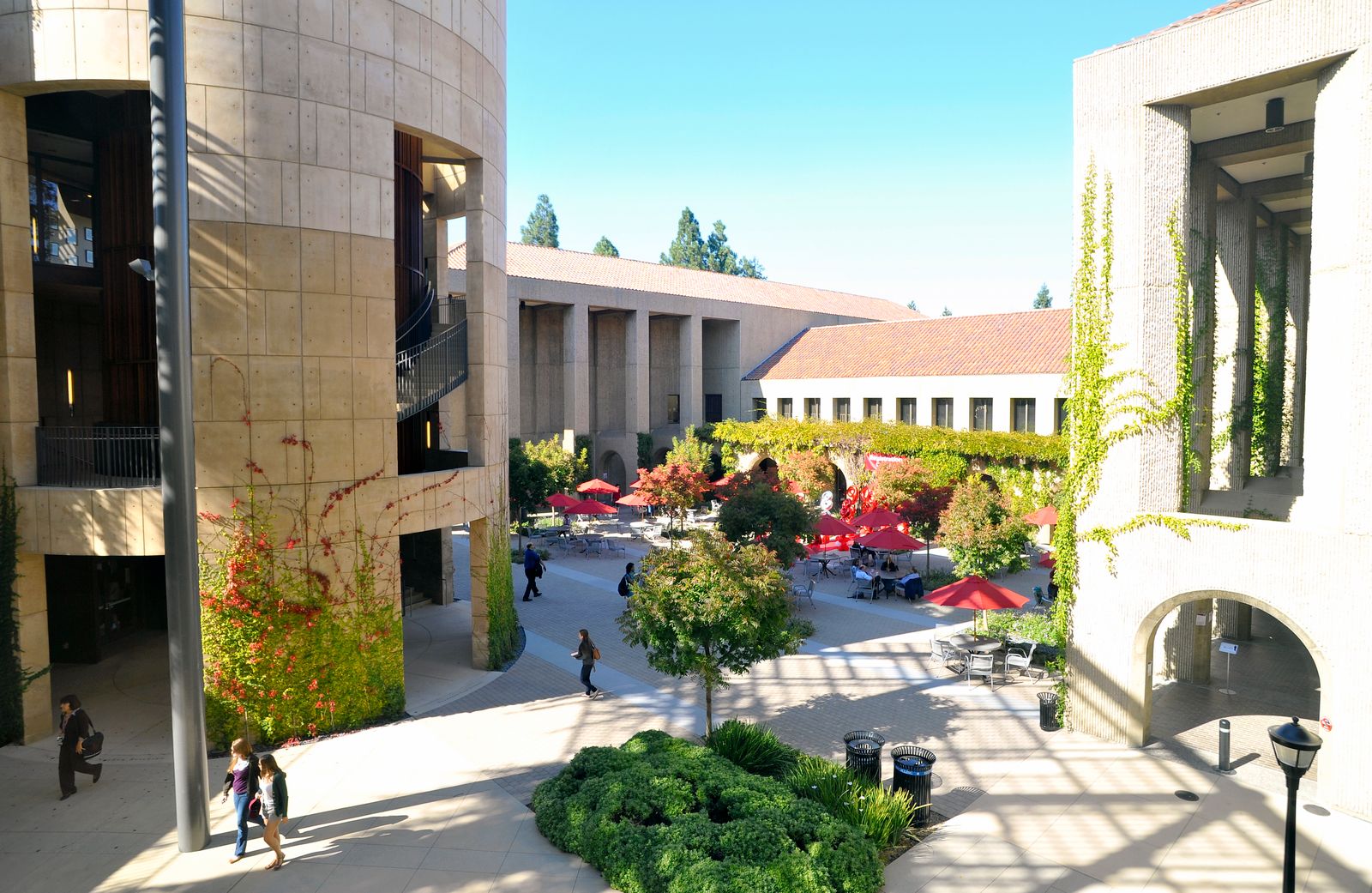
On a beautiful campus in Palo Alto, California, known as The Farm, Stanford Law School offers the intimacy of a small intellectual community combined with the breadth of a great research university. Students work closely with world-class faculty, pursue joint degrees across Stanford's schools of business, engineering, medicine, humanities and sciences, and engage directly with the legal challenges of the moment through eleven clinics and the Stanford Law-and-Policy Labs.
That real-world orientation runs deep. Stanford Law faculty and students are not just studying the law as it is — they are helping to shape the future of legal institutions. From AI's implications for legal doctrine and access to justice, to the future of courts, elections, and democratic governance, Stanford Law works at the frontier of the most consequential legal questions of our time. Its small size is its strength: a tightly knit community that thinks ambitiously and creatively, and translates ideas into action.
The Stanford Law JD curriculum prepares students to think like lawyers in small classes focused on deep discussion and collaboration. As the smallest law school in its peer group, Stanford Law prides itself on providing its students with close personal attention. Coursework is accompanied by many immersive learning opportunities, from practice-focused clinics to seminars in faculty homes to international opportunities and more. Students also discover unique opportunities for creative collaboration and customizing their learning — integrating law with topics such as business, the biosciences, technology, or environmental science.
Additionally, Stanford Law professors have revitalized clinical law training in innovative ways. Through the Mills Legal Clinic, students have access to impactful experiences including the first Supreme Court Litigation Clinic in the country, where students work on live cases before the U.S. Supreme Court. By participating in a clinic, students devote themselves full-time for an entire quarter, free from competing academic obligations such as classes and examinations. Serving as dedicated advocates for their clients and working under the close supervision of clinic directors, Stanford Law students gain firsthand experience in the skills, judgment, and professionalism required of outstanding lawyers and advocates.
The Stanford Law community draws students from all over the country and the world, and from a wide range of interests and backgrounds. Through generous need-based financial aid and a robust public service loan repayment program, Stanford Law invests in helping students achieve their career goals. Further, the Stanford Law First Generation & Low-Income Professionals group is dedicated to supporting the unique needs of this community by assisting with the transition to law school, mentorship, career advising, social activities, and beyond.
Contact information
Explore Stanford Law